

July 26, 2026
County Board Supports ‘Truth in Taxation’ Bill
By Ana Risano
Managing Editor
Next year is a revaluation year for Moore County, with property owners set to learn the newly assessed values of their homes and land. A bill making its way through the North Carolina General Assembly, Senate Bill 992, titled “Truth in Taxation,” would establish procedures for adopting a property tax rate during revaluation years.
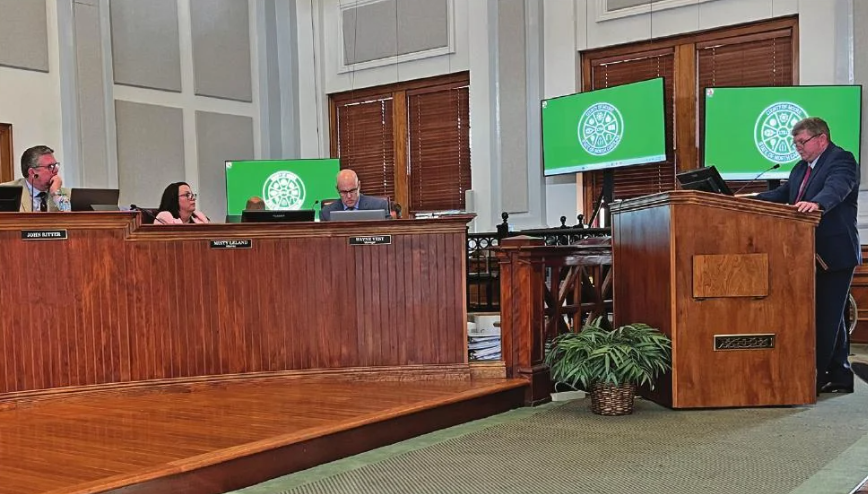
Recently, Moore County Tax Administrator Gary Briggs gave the Board of Commissioners an overview of Senate Bill 992, which has already passed the Senate and is currently in a House committee.
“All indications are that this bill will move forward,” Briggs said. “So we wanted to make you aware because this bill addresses the establishment of a tax rate and what implications that can have in a revaluation year. This is a way to prepare you and let you know what’s being discussed.”
The bill establishes procedures that must be followed if a governing body intends to adopt a property tax rate above the revenue-neutral rate during a revaluation year. The revenue-neutral rate is the tax rate that would generate the same amount of revenue as the previous year despite increased property values.
Moore County operates on a four-year property revaluation cycle, with the last revaluation occurring in 2023. Property values increased by approximately 50 percent during that revaluation. In response, Moore County, Southern Pines, and Pinehurst reduced their tax rates to revenue-neutral or below to lessen the impact on taxpayers.
Under the proposed legislation, if a local government wishes to exceed the revenue-neutral tax rate, it must first approve the increase by resolution following a public hearing. Before the hearing, the governing body must:
- Publish notice of its intent in a newspaper and on its website.
- Mail a notice to every property owner within the jurisdiction.
The mailed notice would include:
- The proposed property tax revenue needed.
- The revenue-neutral tax rate.
- The proposed tax rate.
- The taxpayer’s current property tax amount.
- The estimated tax if the revenue-neutral rate is adopted.
- The estimated tax if the proposed rate is adopted.
- Information about the required public hearing.
If the law is enacted and the required procedures are not followed, any property taxes collected above the revenue-neutral amount would have to be refunded.
Commission Chair Nick Picerno said he does not believe the bill would affect Moore County because the county has consistently adopted revenue-neutral or lower tax rates during previous revaluation years.
“It’s not going to affect Moore County,” Picerno said.
Briggs agreed, noting the county has remained at or below the revenue-neutral rate for several revaluation cycles.
However, Picerno objected to the bill’s notification requirements.
“This is trying to punish the ones who are doing it wrong at the expense of the ones who are doing it right.”
Commissioner Jim Von Canon asked whether the Tax Department would need additional staff to comply with the proposed requirements. Briggs said staffing would likely be sufficient, but estimated it would cost more than $40,000 in additional resources to notify affected taxpayers. He also clarified that each municipality would be responsible for notifying taxpayers within its own jurisdiction.
Picerno proposed sending a resolution to state legislators requesting that the first-class mailing requirement be removed, arguing that notices posted on government websites and published in newspapers should provide sufficient public notice. The Board unanimously supported the request.